
Modern Deck Design Ideas for Small Backyards. Small backyard does not mean small potential.
In Seattle-area neighborhoods especially, lot sizes are often compact. Homes in Bellevue and Sammamish may have beautiful surroundings but limited flat yard space. The key is not building bigger — it is building smarter.
DECK EXPERT TIPS:
Redrra
3/6/20264 min read
Small backyard does not mean small potential.
In Seattle-area neighborhoods especially, lot sizes are often compact. Homes in Bellevue and Sammamish may have beautiful surroundings but limited flat yard space. The key is not building bigger — it is building smarter.
Modern deck design for small backyards focuses on efficiency, clean lines, smart zoning, and multi-functional use. When done correctly, a modest footprint can feel expansive, intentional, and architecturally integrated with your home.
Here is how to approach modern deck design when space is limited.
Start With Purpose, Not Square Footage
Before choosing materials or railing styles, define what you want the deck to do.
Is it:
• A quiet reading retreat
• An outdoor dining space
• A platform for entertaining
• A hot tub zone
• A grilling station
• A sheltered escape from rain
• A visual extension of your living room
Clarity about function drives every design decision — size, layout, railing style, lighting, and roof configuration.
In smaller backyards, every square foot must earn its place.
Design for Flow and Circulation
Small decks fail when furniture blocks movement.
Allow:
• At least 2 to 3 feet of traffic clearance
• Space behind dining chairs (chairs typically require about 3 feet to pull out comfortably)
• Clear walkways between grill and dining area
• Door swing clearance
For dining setups, most decks that comfortably fit a table and chairs require roughly 14 to 16 feet in one direction. For lounge-only areas, you may reduce that depth.
A well-planned 200-square-foot deck can feel larger than a poorly planned 350-square-foot one.
Keep Railing Minimal and Modern
In compact yards, bulky railing visually shrinks the space.
Modern options include:
• Horizontal cable rail
• Aluminum balusters
• Slim-profile metal systems
• Frameless or post-mounted glass panels
Remember: railings must still comply with code. If your deck is more than 30 inches above grade, guardrails are required. Baluster spacing must prevent a 4-inch sphere from passing through. Stair handrails must be graspable and continuous.
Modern style does not override safety.
Elevate Design with Integrated Features
In small backyards, combining functions saves space.
Ideas include:
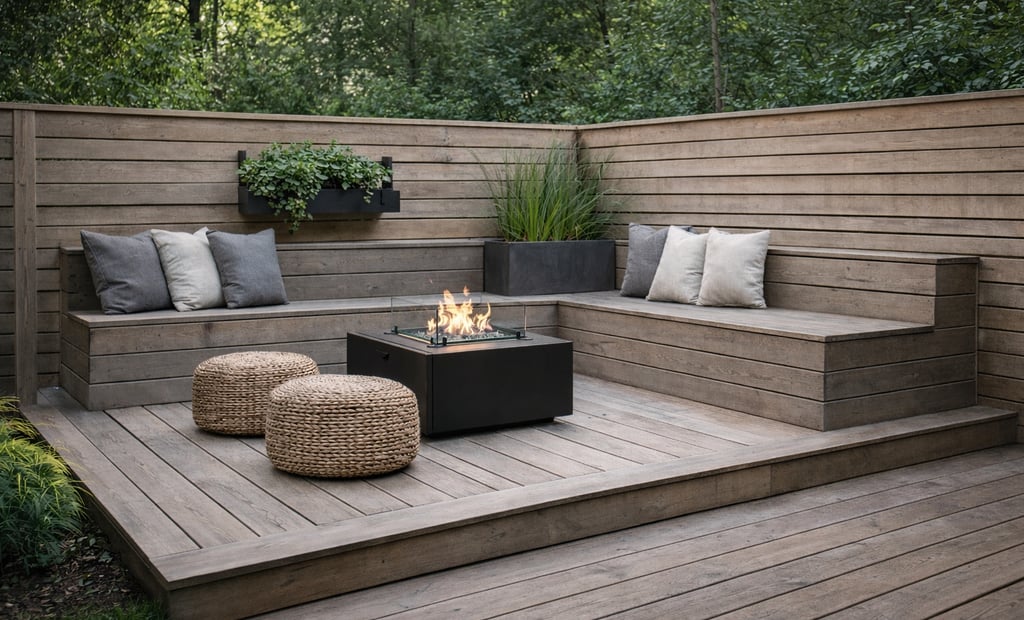
Built-in bench seating with storage
Integrated planters
Privacy screens that double as wind blocks
Built-in lighting in posts or stair risers
Narrow drink rails integrated into top caps
Floating steps that visually expand the yard
Knee walls can define space while hiding structural components and allowing electrical outlets for lighting or heaters.
Every element should serve more than one purpose.
Consider Sun Orientation
Where the sun hits your backyard dramatically affects comfort.
In the Pacific Northwest:
• Summer sun sits high
• Winter sun sits low
• South-facing decks receive more consistent light
• North-facing decks may require lighting and heaters
Properly sized eaves or partial covers can provide shade in summer while still allowing winter light.
If adding a covered section, position it strategically. Even a small roof extension can change how usable the space feels in April and October.
Use Vertical Space
When yard space is limited, think upward.
Options include:
Pergolas
Partial roofs
Privacy panels
Screened enclosures
Modern slat walls
Integrated lighting and heaters
Hanging planters
A covered or partially covered section can create a defined outdoor room without expanding footprint.
In rainy climates like Seattle, adding overhead protection can extend usability by several months each year.
Keep Grilling Safe and Strategic
Grills in small backyards require careful placement.
Avoid placing grills too close to walls, railings, or covered structures. Many fire codes restrict grill placement near combustible materials.
Allow at least 6 to 8 feet of separation from seating areas, when possible, to prevent heat discomfort.
In very small decks, consider:
• A separate grilling pad at grade
• A built-in outdoor kitchen zone
• Clear ventilation under covered areas
Safety and ventilation must guide layout decisions.
Choose Materials That Work in Wet Climates
In Western Washington, moisture management matters.
Wood decks require maintenance but offer warmth and customization.
Composite decking reduces maintenance but still relies on proper framing and drainage.
Regardless of material, ensure:
• Proper ledger attachment (bolts or structural screws, not nails)
• Correct flashing
• Adequate ventilation beneath deck
• Proper post attachment
Modern design must rest on structural integrity.
Small Deck Layout Concepts
Here are modern configurations that work well in compact backyards:
The Dining Rectangle
A clean, rectangular platform aligned with the house. Glass or cable railing on view side. Slim stair run along one edge.
The Lounge Platform
Lower-profile deck with built-in bench seating along perimeter. Integrated lighting. Minimal railing to maintain openness.
The Split-Level Transition
Upper small landing near door. Two or three wide steps leading to lower patio or turf. Creates visual depth.
The Covered Corner
Partial roof covering one quadrant for rain protection. Open section for sun exposure.
The Privacy Pocket
Modern slat wall on one side to block neighbors. Glass or cable on opposite side to keep space open.
How Long Does It Take to Build a Small Modern Deck?
In the Seattle region:
Design and permits: 2 to 6 weeks
Construction for small deck (200–300 sq ft): 1 to 2 weeks
Add time for inspections and weather delays
Glass railings, custom metal, or covered structures may extend timelines.
Smart Questions to Ask Before Building
Before hiring a contractor, ask:
How will the ledger attach to the house?
Will posts be notched or interior-mounted?
How is moisture managed under the deck?
Does this railing meet 4-inch spacing rules?
What maintenance will this material require in the PNW?
How do we maximize sunlight without overheating?
Is ventilation adequate if we add a cover?
Will this pass inspection in my city?
Smart Homeowner ChatGPT Prompts
If you want to think through your layout, try asking:
“What is the minimum deck size for a 6-person dining table with proper clearance?”
“How do I position a small deck for maximum sunlight in Seattle?”
“What railing options look modern but still meet Washington code?”
“How do I combine built-in seating and privacy in a 250-square-foot deck?”
“What are common structural mistakes in small deck construction?”
Using AI as a planning assistant helps you ask better questions during contractor consultations.
Frequently Asked Questions
Is a small deck worth the investment?
Yes. In compact urban properties, usable outdoor space significantly increases livability and perceived home value. The key is thoughtful design.
Can a small deck still feel modern and high-end?
Absolutely. Clean lines, slim railing profiles, integrated lighting, and intentional layout create sophistication even on small footprints.
Do I need a permit for a small backyard deck?
In most cases, yes — especially if the deck is attached to the home or elevated. Always verify with your local building department.
Is composite better for small decks?
Composite reduces maintenance, which many homeowners prefer. However, structural framing and installation quality matter more than surface material alone.
Can I put a hot tub on a small deck?
Possibly — but structural engineering is required. Hot tubs add significant load and require reinforced framing.
Your Home, Your Vision, Our Expertise.
Transforming Spaces with Unmatched Craftsmanship
© 2025. All rights reserved.
Proudly Serving Seattle & King County
Bellevue
Redmond
Bothell
Renton
Issaquah
Sammamish
Kenmore
Seattle
Kirkland
Shoreline
Mercer Island
Woodinville
Newcastle
…and many more across King County!